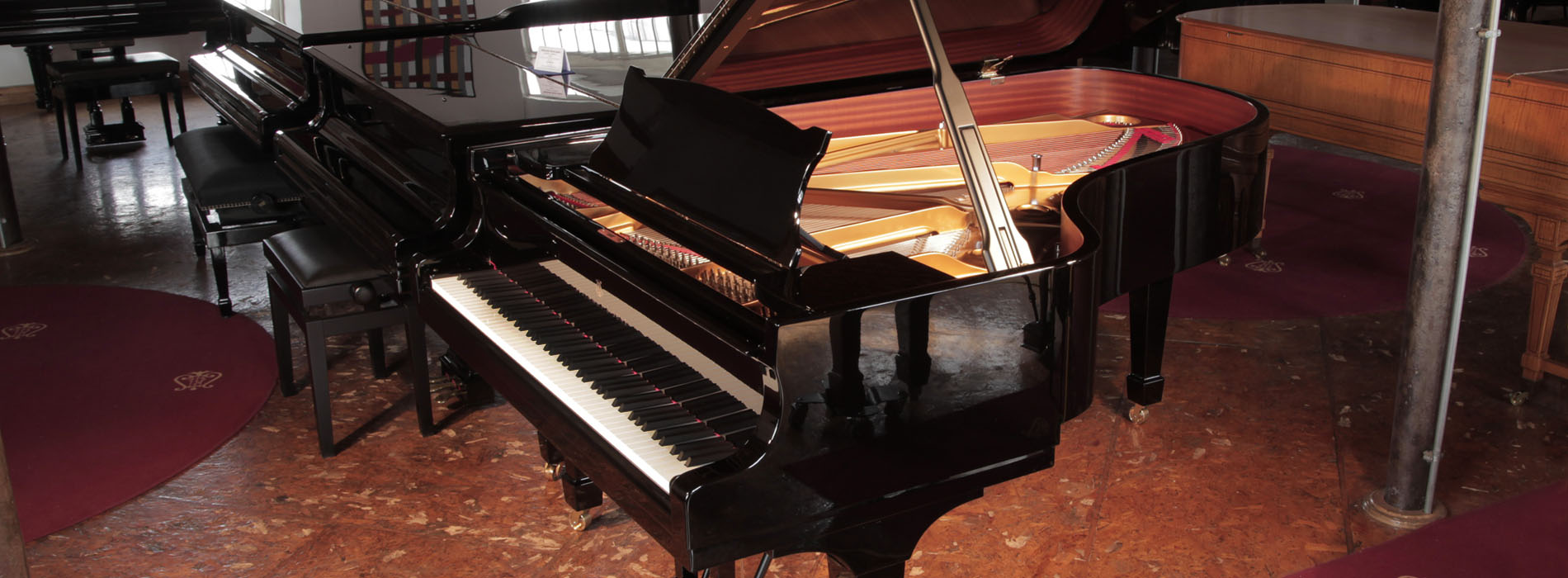
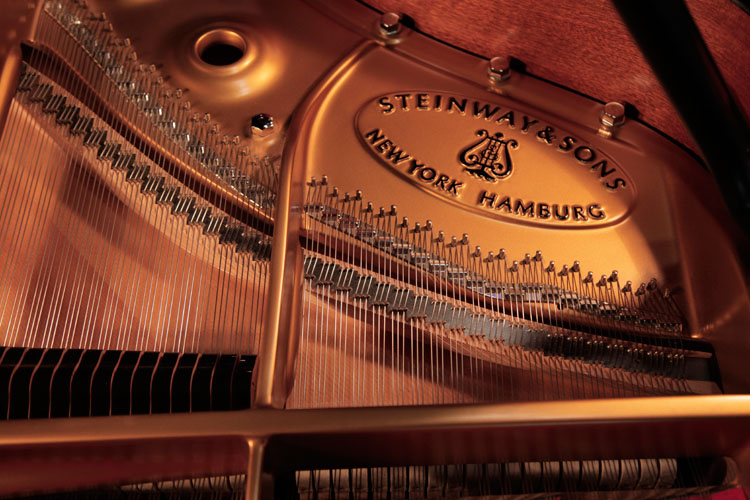
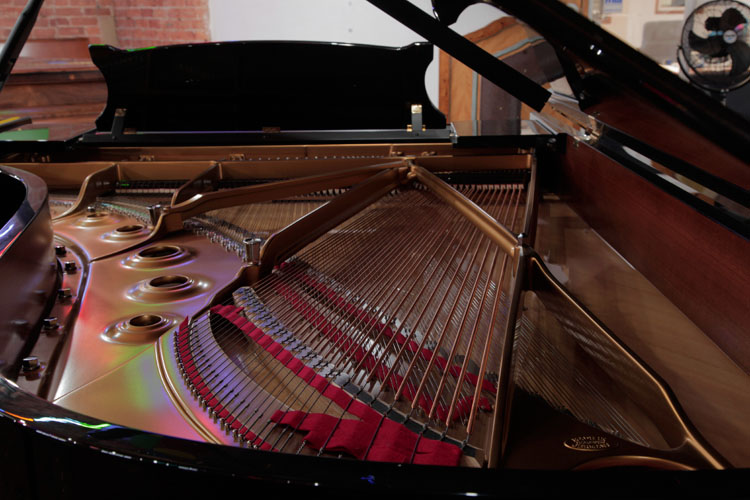
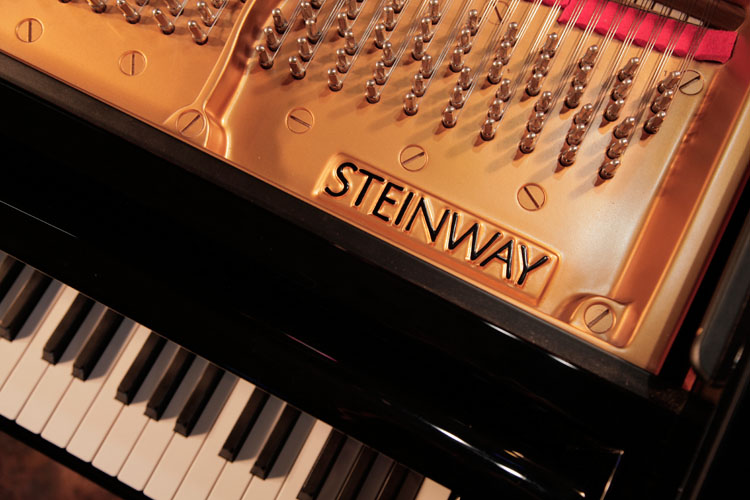
Revered by artists and institutions worldwide, the Model B is frequently called the perfect piano. So why do so many musicians choose it over other models?
The Model B is frequently called the perfect piano, so why do so many musicians choose it over other models?, it’s a conclusion drawn from decades of performance experience, acoustic engineering, and musical enjoyment.
The Steinway Model B occupies a rare middle ground: large enough to deliver near-concert depth and projection, yet still compact enough to inhabit private spaces and studios. To understand why the Model B has earned its reputation, we need to look beyond size alone, into Steinway’s engineering background, patented design features, tonal emminence, and the historical evolution of the instrument itself.
Let’s take a deeper look.
Steinway & Sons: Engineering Excellence
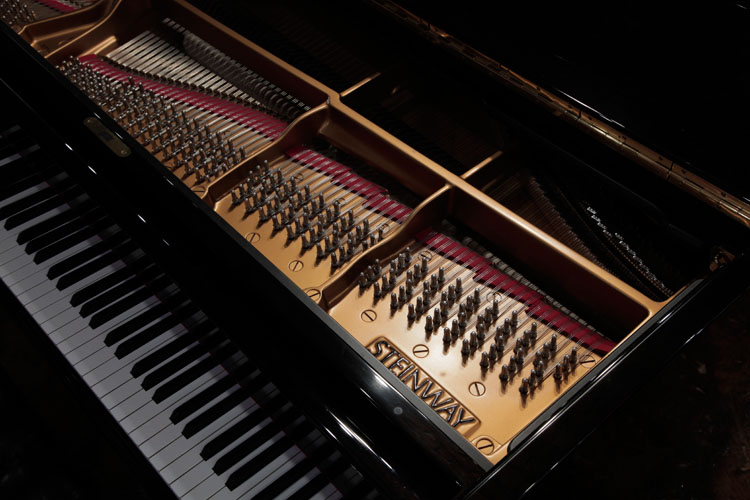
From its earliest years in the 19th century, Steinway & Sons positioned itself not just as a builder of instruments but as an innovator of acoustic technology. The company has accumulated 130+ technical patents that reshaped modern piano construction. Over time, these innovations have fundamentally altered how pianos perform, project, sustain, and respond resulting in THE unmistakable Steinway tone.
Among the most influential developments are:
The cross-stringing (overstrung) scale design (1859), which allows bass strings to run diagonally across the soundboard, increasing length and tonal richness.
The duplex scaling (1872), where string segments are proportioned to vibrate sympathetically, adding harmonic complexity.
The continuous bent rim (1878), formed from layers of hardwood pressed into a single curved structure, increasing strength and improving vibrational behaviour.
The tapered (diaphragmatic) Sitka soundboard (1936), shaped to encourage greater flexibility and richer tonal depth.
The Hexagrip Pinblock offering supreme tuning stability.
The Accelerated Action delivering outstanding responsiveness.
The Model B is a direct beneficiary of these innovations.
The Model B’s Dimensions — Why This Size Matters
At 6′ 11″ in length (211 cm), the Model B sits between salon sized grands and full concert instruments. The difference of a foot or two compared with smaller models translates into:
Longer bass strings
A larger soundboard area
Greater air movement
More developed low-frequency response
Broader dynamic ceiling
In practical terms, this means the Model B can produce orchestral weight when required, but it can also be controlled in an intimate repertoire without overwhelming the room. Its dimensions allow it to be well sized for most performance venues, whilst still a viable choice for some home settings.
This balance is one of its defining virtues.
Excerpt from Tchaikovsky Dumka Op59 on Steinway Model B grand piano #583218
"That piano teacher that my mom took me to had a Steinway… a Steinway B. It was so much better than the piano we had at home" Billy Joel describing his first experience with a Model B
Tone Profile — Kaleidoscopic Power
Technicians often describe Model B instruments as having a complete tonal spectrum.
This points to three qualities:
Bass authority The bass register has depth and definition, not just volume. Notes retain pitch clarity.
Singing mid range The middle registers — where much piano literature lives, projects with lyrical character and warmth.
Brilliant treble The upper register can cut through a texture when needed, whilst remaining nuanced under the right touch.
Because the Model B’s scale design and soundboard size are generous, it supports a wide palette of tonal colours. Pianists can push it toward chamber intimacy or near concert brilliance depending on voicing and technique.
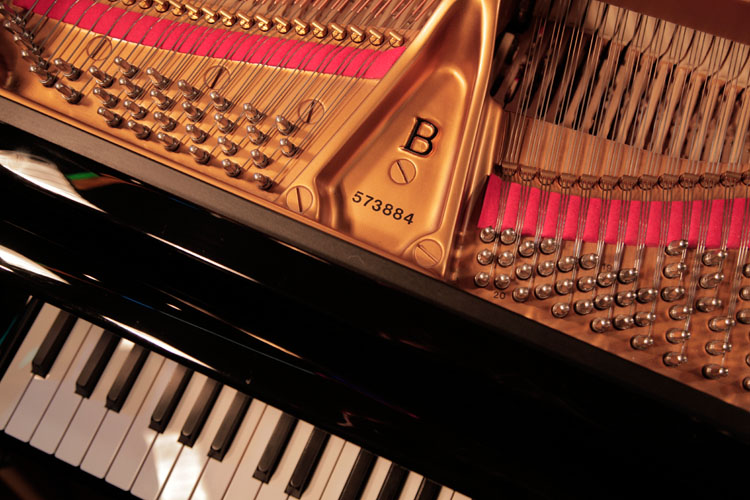
Yolanda Zhang Plays Rachmaninoff Etudes Tableaux Op.33 No.3 Grave on Steinway Model B grand piano #573884
Touch and Action — Control at Speed
The geometry of Steinway’s action emphasizes leverage efficiency and repetition speed. In the Model B, the longer key levers (compared with smaller grands) give the player increased mechanical advantage and finer control at low dynamic levels.
That translates into:
More precise pianissimo control
Faster repetition reliability
Greater tonal shading at moderate force
Reduced fatigue in extended passages
For advanced repertoire — especially Romantic and 20th-century pieces — this level of control matters.
Excerpt from Rachmaninov Opus21 arr Volodos on Steinway Model B grand piano #573884
"…I have selected a piano, a Model B, for a music school… something absolutely magical for those kids." Víkingur Ólafsson on choosing a Model B for a community music space
Historical Position of the Model B
Steinway defines its grand piano line up into clearly defined size categories, each serving distinct environments: home, studio, salon, and concert stage. Over time, the B became the preferred choice for conservatories, professional teaching studios, and recording rooms because it consistently delivered near-concert performance without concert hall volume.
Recording engineers in particular have long favoured this size range because microphones capture its full spectrum easily without the spatial challenges posed by a nine-foot instrument.
Steinway Model B grand piano walkaround
Steinway Grand Models — Practical Comparison
Here is a simplified comparison of the primary Steinway grand sizes and their typical musical roles.
Maximum projection, orchestral power, largest tonal envelope
The Model B’s Real Strength — Versatility
If there is one word that captures the Model B’s identity, it is versatility.
It adapts well to:
Solo repertoire across eras
Chamber collaboration
Vocal accompaniment
Recording work
Advanced teaching environments
Private performance spaces
It is powerful without being unwieldy, refined and responsive without being temperamental.
Ellis Arey plays Scriabin - Five Preludes Opus 16 on Steinway Model B #583218
Final Thoughts
If your goal is to own an instrument that approaches concert-level musical capability while remaining practical for everyday artistic life, the Model B makes a compelling case. It embodies Steinway’s historical engineering breakthroughs, state of the art scaling design, and tonal mastery in a form that serves more musicians in more spaces than perhaps any other grand in the line up.
For many players, the question is not whether the Model B is ideal — but whether anything else fits the brief quite as well.
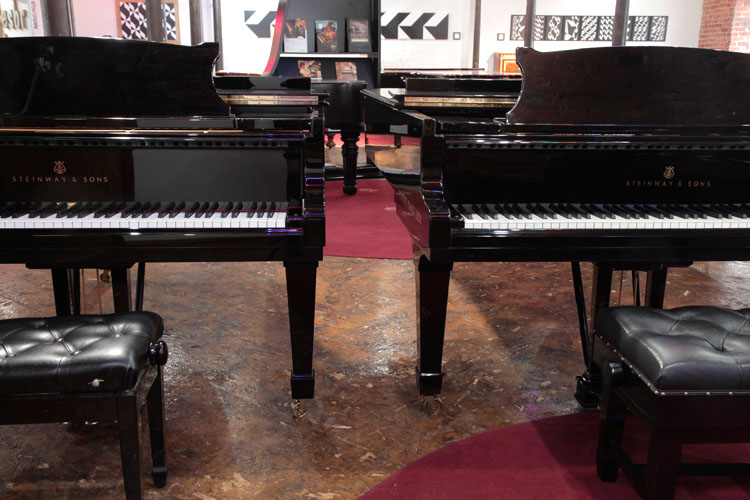
At Besbrode Pianos, we offer a welcoming, relaxed environment to explore our extensive Steinway piano collection. With 6 Steinway model B's currently in store, you can compare examples from a range of manufacturing eras — from antique treasures to modern masterpieces.
Appointments ensure you have space and quiet to test instruments thoroughly — just you and the music.
For pianists seeking an extraordinary instrument with character, precision, and soul, Besbrode’s collection offers an unparalleled selection in the UK.
Sophie Pitcher works as Digital Marketing Manager at Besbrode Pianos in Leeds, bringing with her more than 25 years of experience within the piano industry. Over the course of her career, she has cultivated an informed perspective on piano craftsmanship, encompassing an extensive knowledge of leading brands, model variations, manufacturing heritage, and market valuation. Her expertise is also aesthetic; possessing an appreciation for exceptional instruments, from historically significant antiques to rare and exquisitely designed art case pianos. This breadth of knowledge enables her to offer nuanced insights that resonate with both seasoned musicians and discerning collectors alike.